Friday, 12 February 2021

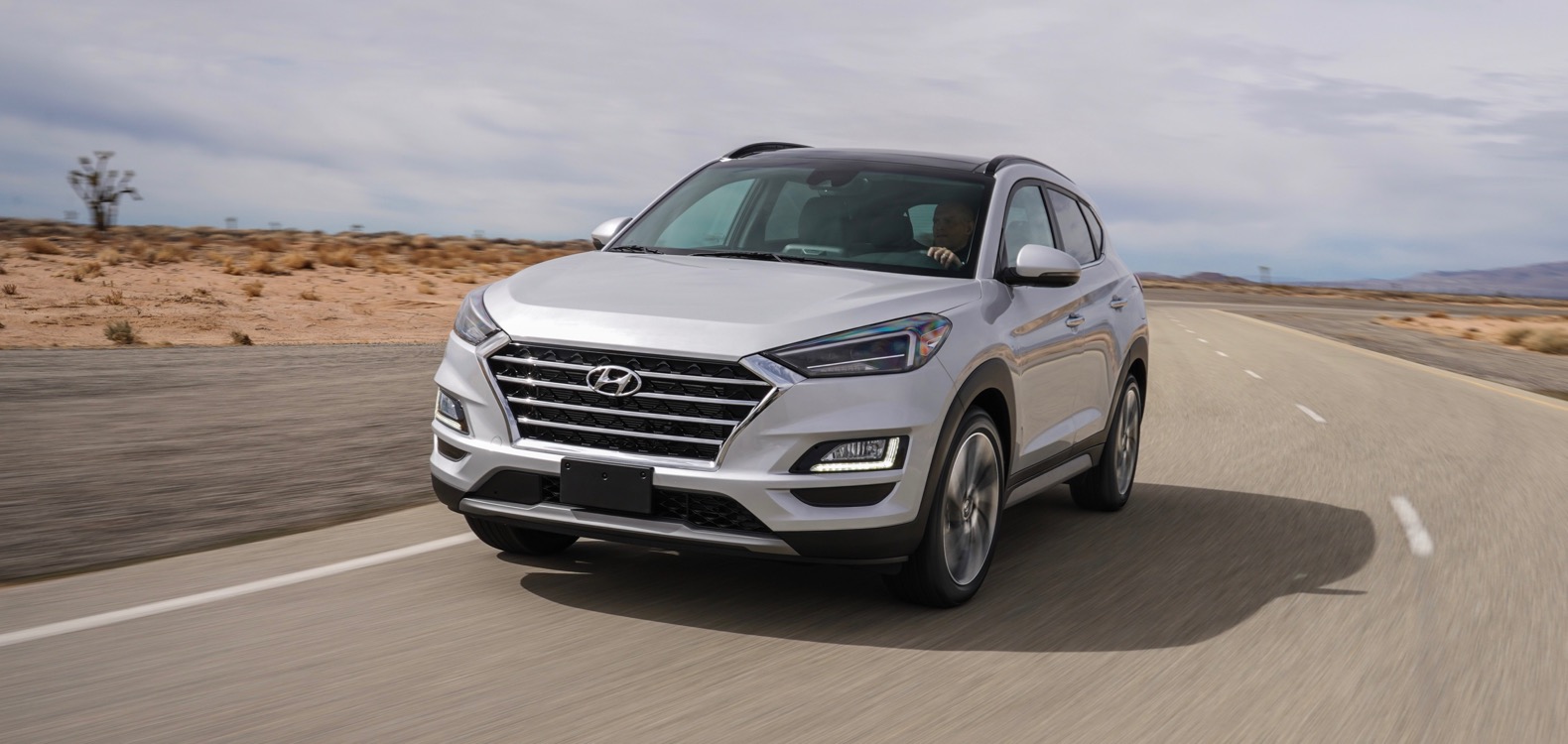
2021 Hyundai Tucson Review


What you want to know

Does the 2021 Hyundai Tucson have all-wheel drive?

The 2021 Tucson usually sends drive to its front wheels, although all-wheel drive (AWD) can be ordered on any trim at an additional cost. The Tucson’s AWD system is an on-demand type, meaning the car remains pulled by its front wheels until traction is needed, at which point all four wheels are driven. However, it can be locked into a 50/50 front-to-rear power split for better grip in slippery conditions.

Which is bigger, the Hyundai Santa Fe or the Hyundai Tucson?

The Santa Fe is larger. The Hyundai Tucson is considered a compact crossover/SUV and competes against the Honda CR-V, Toyota RAV4, Ford Escape, Kia Sportage, Mazda CX-5 and Nissan Rogue, while the midsize Santa Fe is more like a Chevrolet Blazer, Nissan Murano or Ford Edge.

Is the 2021 Hyundai Tucson safe?

Undoubtedly. The Insurance Institute for Highway Safety (IIHS) gave the Tucson its highest rating of Good in every category and named it a Top Safety Pick. The National Highway Traffic Safety Administration (NHTSA) awarded the Hyundai Tucson its maximum score of five stars overall.


Overview

The 2021 Hyundai Tucson from Group 1 Hyundai has an unbeatable 10-year/100,000-mile powertrain warranty. It could also be said that the Tucson offers a more muscular engine and all-wheel drive.

The 2021 Tucson still represents good value for money, and owners won’t lose their shirts on it when the time comes to sell.

Driving the 2021 Hyundai Tucson

There are no big surprises or troublesome learning curves with the 2021 Tucson. It’s comfortable and quiet, and the suspension has been tuned to take corners with confidence, despite the vague steering feel. Sport trim’s 19-inch wheels tend to reduce ride quality and increase sound levels, so test-drive a few versions to find the ideal choice.
Favourite Features

HANDS-FREE SMART POWERED TAILGATE

No need to wave a foot under the bumper, simply approach the rear of the Tucson with the key fob in your pocket, wait a few seconds, and the tailgate opens automatically.

YES ESSENTIALS STAIN PROTECTION

The Tucson’s Yes Essentials seat fabric is a brilliant addition to an already nice cabin. Beyond repelling stains, the material also helps to reduce the build-up of odours and static electricity.

2021 Hyundai Tucson Interior

A sensible dashboard houses simple controls for the climate and audio systems. At night, those controls have soft blue back-lighting. The digital display doesn’t overload the driver with too much information. A 7-inch infotainment touchscreen (measured diagonally) is also standard, going up to an 8-inch unit in the Ultimate. Limited and Ultimate trims have leather seating surfaces.

The rear seats are comfortable enough, even if passenger space back there is not class-leading. And the luggage area’s adjustable floor also includes storage for the cargo cover. With the rear seats in place, cargo space is 31 cubic feet. When folded, it’s 61.9 cubic feet.

2021 Hyundai Tucson Exterior

The clean look of the 2021 Hyundai Tucson is arguably easy on the eye, especially for fans of Audi’s styling approach. There’s nothing wrong with a mainstream marque paying homage to something upscale and successful. It makes the commute more bearable and lets the owner feel good.

Beneath the styling is a chassis made up of more than 50 percent high-strength steel, contributing to the Tucson’s excellent safety credentials. SE and Value models ride on 17-inch wheels, while the SEL, Limited and Ultimate move up to 18s. The Sport trim rolls on 19-inch wheels.

2021 Hyundai Tucson Notable Standard Equipment

A lavish amount of standard equipment for the money has long been a hallmark for Hyundai. In ascending order, the 2021 Hyundai Tucson’s trim levels are SE, Value, SEL, Sport, Limited, and Ultimate.

SE starts off with a 164-horsepower 2.0-liter 4-cylinder engine, front-wheel drive, 17-inch alloy wheels, heated/power-folding side mirrors, 6-way manually adjustable driver’s seat, Bluetooth, and smartphone integration.

The obviously but aptly named Value trim adds blind-spot monitoring, an 8-way power-adjustable driver’s seat, heated front seats, satellite radio, and keyless entry/ignition.

LED headlights and an Infinity audio system come in at the Sport level, while the Limited trim has leather seating surfaces, a heated steering wheel, and a 360-degree camera system. The Ultimate comes with an 8-inch infotainment touchscreen, navigation, adaptive cruise control, and a panoramic sunroof.

2021 Hyundai Tucson Notable Optional Equipment

All-wheel drive is optional in every trim level. The bigger 181-horsepower engine goes into the SEL trim and above.

To acquire other desirable extras — like pedestrian detection for the forward collision mitigation system, rain-sensing wipers, powered tailgate, panoramic sunroof, wireless device charging, and heated rear seats — buyers must look to the higher trim levels.

2021 Hyundai Tucson Engine

The base SE and Value Edition employ a 2.0-liter 4-cylinder engine making 164 horsepower. It does its job, but not in any noticeably refined manner. The rest of the range is propelled by a 2.4-liter 4-cylinder engine producing 181 horsepower. Both engines connect to a 6-speed automatic transmission.

All-wheel drive (AWD) is available with either engine, replacing the standard front-wheel-drive (FWD) setup.

2.0-liter inline-4

161 horsepower @ 6,200 rpm

150 lb-ft of torque @ 4,700 rpm

EPA city/highway fuel economy: 23/28 mpg (FWD), 22/25 mpg (AWD)


2.4-liter inline-4

181 horsepower @ 6,000 rpm

175 lb-ft of torque @ 4,000 rpm

EPA city/highway fuel economy: 22/28 mpg (FWD), 21/26 mpg (AWD)


Which 2021 Hyundai Tucson Model is Right for Me?


2021 Hyundai Tucson SE

17-inch alloy wheels

7-inch infotainment touchscreen

Apple CarPlay/Android Auto

Blind spot-compensating driver’ s-side mirror

Stain-resistant cloth upholstery

Driver attention monitoring


2021 Hyundai Tucson Value Edition

Blind-spot monitoring with rear cross-traffic alert

8-way power-adjustable driver’s seat (inc. 2-way lumbar adjustment)

Keyless entry/ignition

Heated front seats/side mirrors

Roof rails

Satellite radio

Blue Link Connected Car system


2021 Hyundai Tucson SEL

2.4-liter engine

18-inch alloy wheels

Dual-zone automatic climate control

Rear-seat vents

Second-row USB outlet


2021 Hyundai Tucson Sport

19-inch alloy wheels

Leather-wrapped steering wheel

Infinity 315-watt/8-speaker premium audio

Wireless charging

LED exterior lighting

Hands-free smart tailgate


2021 Hyundai Tucson Limited

18-inch alloy wheels

360-degree camera system

Leather seating surfaces

Heated steering wheel

Power-adjustable front passenger seat


2021 Hyundai Tucson Ultimate

Panoramic sunroof

8-inch touchscreen

Automatic high beams

Adaptive cruise control with stop/go

Ventilated front seats

Heated rear seats

2021 Hyundai Tucson Safety Technology

Forward-collision mitigation

This system warns the driver of an impending collision with the vehicle immediately ahead. Should the driver not respond, it will apply the brakes automatically and bring the car to a full stop. On the Ultimate trim, pedestrian detection technology is also included.

Blind-spot monitoring

Standard in the Value and higher trims, it detects vehicles in the driver’s blind spots and creates a visual alert in the relevant side mirror. If the driver doesn’t take corrective action, an audio warning will sound.

Automatic high beams

Offered only on the Ultimate trim, this feature automatically switches between low and high beams whenever it detects oncoming nighttime traffic.

Driver attention warning

Monitors the driver continuously. When it detects drowsiness or inattention, an audio alert is the first warning, followed by an alert message in the instrument cluster. Standard in every 2021 Tucson.


Article source: https://carcraziness.postach.io/post/2021-hyundai-tucson-review

Monday, 7 December 2020

Hyundai Grand i10 Range Rejuvenated


Hyundai has rejuvenated its Grand i10 range in South Africa with new features and added a new entry derivative to give this popular entry-level model a fresh appeal in the local automotive market.

The Grand i10 hatchback, which is the smallest new car on Group 1 Hyundai’s showroom floor, has taken over the role of the entry-level model after the i10 was discontinued.

“We had a relook at the Grand i10 range, change the specification levels and added a new entry derivative with a 1-litre engine and the Motion specification level. The end result is a hatchback model with a variety of derivatives that offer exceptional value,” says Stanley Anderson, sales and operations director of Hyundai Automotive South Africa.

“There is a choice in the Grand i10 range for many different buyers – from the young first-time owner or student who wants an affordable car, to the buyer of a second family car with generous luxury features or someone who want to downscale to a smaller, yet comfortable vehicle later in life.”

The Grand i10 is remarkably spacious inside, yet small in overall diameters, and is filled with standard features that have made it an entry-level top-seller in the Hyundai arsenal in South Africa.

The revised line-up of this smallest hatchback in the Hyundai range consists of six derivatives –three powered by the new 1-litre 3-cylinder engine delivering 48 kW at 5 500 r/min and 94 Nm maximum torque at 3 500 r/min.; and the other three using the 1.25-litre 4-cylinder engine which delivers 64 kW at 6 000 r/min. and 120 Nm maximum torque at 4 000 r/min.

The 1-litre derivatives are the 1.0 Grand i10 Motion (5-speed manual); 1.0 Grand i10 Motion (4-speed auto); and the 1.0 Grand i10 Fluid, also with the 5-speed automatic gearbox.

The derivatives with the more powerful engine are the the flagship 1.25 Grand i10 Fluid (5-speed manual) and 1.25 Grand i10 Fluid (4-speed auto).

A passenger airbag has now been added in all the derivatives to the driver’s airbag, and steering wheel remote controls, including buttons for the Bluetooth connectivity for cell-phones and an integrated microphone also forms part of the upgraded features across the range.

The Grand i10 Fluid derivative boasts standard convenience features such as electrically heated side mirrors that can also fold in at the touch of a button, and an “infotainment” centre with a large full-colour touch-screen where, among a variety of features, one’s telephone Bluetooth pairing can be done.

Customers also have the option to buy an SD memory card for R2 500 to activate the navigation system on the infotainment system in the derivatives with the Fluid specification level.

With a 2-year/30 000 km service plan thrown in as part of the standard package of the Fluid derivative, the Grand i10 presents great value.

Design and styling

Influenced by Hyundai Motor Company’s design philosophy, “fluidic sculpture”, the Hyundai Grand i10 features sleek and substantial lines that make the hatchback look dynamic and somewhat larger than its actual dimensions.

The body shell of the Grand i10 yields one of the roomiest occupant cabins on the market, as well as an impressive 256 litres of trunk capacity. Up to 1 202 litres become available when the rear seats are folded – also one of the best in its class. New levels of craftsmanship can be found in the spacious interior, together with levels of comfort and safety equipment commonly only found in segments above.

The sleek exterior design of the Grand i10 ensures a drag coefficient (Cd) of just 0,35, which is aided by detailed improvements such as windscreen sealing that does not protrude into the airstream. The aerodynamic shape reduces wind noise as well as fuel consumption, contributing to very low noise levels.

The Grand i10 incorporates the hexagonal grille, the signature front end for Hyundai Motor’s cars, which clearly showing its family DNA and providing a link to its larger siblings. Grand i10 Fluid derivative boast a chrome grille in front, as well as alloy wheels. The Motion derivatives are equipped with steel wheels with an attractive cover.

Colour-coded door handles and side mirrors, with turn indicators built into them, combine with the attractive alloy wheels (in the Fluid specification level) to create a very good-looking small hatchback.

At the rear, a combination lamp with a spoiler and built-in LED lamp gives the Grand i10 attractive looks seen from behind.

Interior styling and trim for the Motion and Fluid derivatives black cloth.

The Grand i10 is available in 8 exterior colours, including Star Dust, Phantom Black and Polar White to a lovely Flame Orange, Fiery Red and Wine Red. Marina Blue and Sleek Silver complete the choice of colours.

A long list of standard features
Among the many features of the revised Grand i10 are luxury items such as the infotainment centre with Bluetooth connectivity to the sound system, keyless entry and electrically heated and folding side mirrors for the Fluid derivative; and for all the derivatives USB and AUX ports for the sound system; an air conditioner and central locking for all the derivatives.

All derivatives are also equipped with front fog lamps, a full-size spare wheel, attractive 14-inch alloy wheels, height adjustment for the driver’s seat, and remote controls for the sound system and driver’s information on the steering wheel.

Under the front passenger seat is a handy storage tray, while the driver’s seat belt’s shoulder mounting point is height-adjustable. Front, as well as rear passengers, have height-adjustable headrests.

A handy trip computer displays inter alia fuel consumption and range left with the fuel in the tank.

Spirited Kappa engine delivers excellent fuel economy
The Grand i10’s 1,25-litre engine belongs to Hyundai Motor’s popular “Kappa” engine family and incorporates a range of advanced technical features that raise power and torque and enhance smoothness and driveability.

Outstanding features of the Kappa’s modern architecture include: A dual overhead camshaft (DOHC), dual continuously variable valve timing (CVVT), a very stiff cast aluminium block with cast-iron liners, aluminium cylinder head, light connecting rods and maintenance-free long-life timing chain.

The 1 248 cc engine delivers 64 kW peak power at 6 000 r/min., and reaches its maximum torque delivery of 120 Nm at 4 000 r/min. The power is delivered in a spirited fashion and the small, yet perky engine never gives the impression that it is labouring.

Fuel consumption can be as low as a measured 5,9 litres/100 km, and 6,9 litres/100 km for the 1.25-litre derivatives with the four-speed automatic gearbox.

The fuel-consumption of the 1-litre engine is 5,4 litres/100 km for the manual gearbox derivatives and 5,9 litres/100 km for the automatic version.

Suspension and road manners
The McPherson strut front suspension of the Grand i10 and it’s electric motor-assisted steering system provides accurate positioning on the road and good handling characteristics.

At the rear, a coupled torsion beam suspension ensures comfortable driving with a stable and firm grip on the road. Improvements to the trailing arm geometry and rear coil springs of the rear suspension have contributed to the secure handling and comfortable ride of the Grand i10.

The body shell of the Grand i10 has exceptional torsional rigidity, due to the use of high-tensile steel that forms 29% of the body structure of the car.

The firm underpinnings not only improve the car’s impact-resistance but also yield low levels of noise, vibration and harshness (NVH). The Grand i10’s noise levels are recorded as low as 38 decibels (dB) at idle and 65 dB at highway speed.

Dual airbags – one for the front passenger and the other for the driver – and an Advances Brake System (ABS) takes care of safety in the Grand i10, and are now standard safety features in all derivatives.

Pricing
At a price range from R191 900 to R256 900 – with Hyundai’s 5 year/150 000 km manufacturers’ warranty, additional 2 years/50 000 km powertrain warranty, and 5-year/150 000 km roadside assistance thrown in – the Grand i10 offers exceptional value.

The Grand i10 range with their standard recommended retail prices is:

Grand i10 1.0 Motion manual R191 900

Grand i10 1.0 Motion automatic R216 900

Grand i10 1.0 Fluid manual R216 900

Grand i10 1.25 Fluid manual R230 900

Grand i10 1.25 Fluid automatic R256 900


Article sourced from: http://www.roadsafety.co.za

Hyundai Venue: Hyundai’s Compact SUV


2019 was quite the year in the compact SUV market for 1.0-litre turbocharged engines, the Ford Kuga (which has been here for quite a while already) was joined by VW’s T-Cross and the Hyundai Venue.

Hyundai launched the Venue in South Africa early in December 2019 for the African, Indian and Middle-Eastern market. We hadn’t heard much about the vehicle before besides the reveal at New York International Auto Show, and that was that. No campaigns promising of what to look forward to or bits ‘n bobs of info teased. Well, except for that episode where Hyundai SA caused enough chatter with one well-parked trailer.

We were fortunate enough to have key people from South Korean HQ at the event, giving us insight as into what Hyundai plans to do next. The plan is to welcome new trends and customer demands, which will see their product shifting towards smarter-mobility innovations, shifting their business model from a mobility brand to a smart-mobility brand. Enough about brand Hyundai though, let’s get into what we came for, the Venue.


It’s Not Pronounced With A Fancy Accent

You pronounce it like you think you do, Venue, there’s no fancy French accent to accompany it. This is part of Hyundai’s new global strategy, one global name for one model. The name is a reflection on the realisation of achievement; a venue can be a special place, the car’s ability to take you to that place, and seeing the potential in an action.
What Is It?

We already have the Kona and the Creta, so where does the Venue fit into the mix? The Kona is the baby of the group; less compact SUV more hatch on stilts with bigger bumpers. The Creta is sold in India, South Africa and a few other markets, slotting in there above the Kona. The Venue fits in below both of these as a true compact SUV.

Built in Chennai, India and made for the global market, this entry-level A-segment (according to Hyundai) offers a taste of urban adventure to those who need to consider their budget. Styling cues are on-trend – boxy shape, raised ride height, LED rear light clusters, and the two-tone roof and body combo on the top-spec Glide. The Motion gets 15-inch steelies, while the Fluid and Glide get 16-inch alloys wheels.


Winner One Litre

Powered by the 1.0-litre TGDI three-cylinder turbocharged petrol engine that we’ve sampled previously in the Kona, producing 88 kW and 172 Nm of torque. While the Venue is the last compact SUV to launch locally it has something in its favour; manual or auto gearbox options across the entry-level Motion and mid-spec Fluid. This engine in the Kona was a winner; in the Venue, we have no immediate qualms.

At launch, the 7-speed DCT (dual-clutch transmission) shifted seamlessly, well ratioed between the gears, you can catch it out by anchoring your foot into the throttle, lag will occur as it takes a second or two to catch-up to your immediate wants. Though that is being unfair, it’s not designed to be a high-performance SUV, it’s built for Adventuring-Lite, where you want to go on the dirt road but don’t want anything technical or involving opposing wheels in the air. Pick of the gearboxes in my opinion is the six-speed manual. Not relying on set gear ratios, as per the DCT, means you can wrangle the most out of the Venue; or the least, depending on your driving needs.

Claimed fuel consumption is 6.5 l/100 km on the manual and 6. 9 l/100 km on the DCT. The Venue competed in the 2019 WesBank Fuel Economy Tour before its official launch, returning an average fuel consumption of 5.8 l/100 km over the five day, 2 500 km event. And having been on the event myself, I can say that 5.8 l/100 is a realistic and achievable number.


Safety In Numbers

Standard across the Venue range at Group 1 Hyundai is anti-lock braking, electronic stability control and electronic brakeforce distribution, all of which keep you on the road in a time of need. The entry-level Motion only gets driver and passenger airbags, while the Fluid and Glide get six airbags. All the models get Hill Start Assist and a multifunction steering wheel.

The interior is what Hyundai has become known for in the last few years, essential technology, mid-to-premium finishes (depending on spec line) and no feeling of being ripped off when you look around. The Fluid and Glide lines get a leather-wrapped steering wheel with audio and cruise control function, an 8-inch touchscreen infotainment unit with Apple CarPlay and Android Auto capability, the screen doubles as a reverse camera display. The glove box with cooling function and something not many compact SUVs possess – rear seats have dedicated air vents.

As first impressions go it’s not going to have the gilt-paved path ahead, pricing will be a challenge against the competitors. The EcoSport is cheaper but, it’s old and dynamically challenged. The T-Cross is a smidgen cheaper and suffers awful lag from the DSG gearbox. The Venue does what it says on the box without the need to tick the options list and I like that, what you see is what you get.


Hyundai Venue Pricing

  • Venue 1.0 Motion (manual) R 291 500
  • Venue 1.0 Motion (DCT) R 325 500
  • Venue 1.0 Fluid (manual) R 330 900
  • Venue 1.0 Fluid (DCT) R 335 500
  • Venue 1.0 Glide (DCT) R393 500

Included in the prices are Hyundai’s groundbreaking 7-year / 200 000 km warranty, 7-year / 150 000 km roadside assistance, and a 3-year / 45 000 km service plan. Service intervals are at 15 000 km, or annually when applicable.


Article from: https://we-love-hyundai.weebly.com/blog/hyundai-venue-hyundais-compact-suv

Hyundai i20: 2020 Interior Examined

 The Korean automaker, Hyundai, has now revealed a more high-tech ambience compared to the previous-generation Hyundai i20 model.


As with most new cars nowadays, the dashboard is dominated by two large digital screens. There’s a 10.25-inch instrument cluster behind the steering wheel and a 10.25-inch center touchscreen positioned atop the center console.

The digital instrument panel changes colour based on the selected drive mode: blue for Normal, green for Eco, and orange for Sport. Further to the right, the AVN (audio/video/navigation) touchscreen integrates a range of new connectivity features never before seen in the Hyundai  i20, including Hyundai Bluelink Telematics.

Hyundai LIVE services are among these and include real-time traffic and weather data, information about nearby fuel stations (including fuel prices) and parking spaces, and online voice recognition. Other Bluelink services offered by the new i20 include Find My Car, remote lock services, navigation to local points of interest, vehicle alarm information, and maintenance reports.

The infotainment system is fully compatible with Android Auto and Apple Car Play, the latter available wirelessly in combination with the 8-inch Display Audio. A wireless charging pad and eight-speaker Bose sound system are available as well.

Design-wise, the all-new Hyundai i20’s cabin is available, at Group 1 Hyundai, with three different interior trims: Black, Mono and Black & Grey. Ambient lighting technology is also present and the air vents are connected with horizontal blades stretching across the whole dashboard. We can also spot a new multifunction steering wheel very similar to the one in the new Sonata and door cards “inspired by shapes found in nature.”

The all-new Hyundai i20 had  its official debut on March 3 at the Geneva Motor Show.


Article sourced from: https://www.carscoops.com\


Tuesday, 17 November 2020

New Hyundai Accent Efficiency And Power


2020 Hyundai Accent Fuel Economy Ratings & Powertrain Highlights

Cars are not a one-size-fits-all endeavour, nor should they be. We all have different driving needs and preferences, and if you are in need of a daily driver that will stretch your fuel budget to the brink, a compact car is right up your alley. The Hyundai Accent fits the bill, and if you are wondering just how efficient and powerful this car is, we have you covered. Let’s dig deeper into the 2020 Hyundai Accent fuel economy ratings and powertrain highlights.


Fuel Economy by the Numbers

The 2020 Hyundai Accent has the following average consumption rates:

Hatch Manual: 6.4 L/100 km

Hatch Automatic: 6.8 L/100 km

Sedan Manual: 6.0 L/100 km

Sedan Automatic 6.4 L/100 km


Horsepower and Torque

You would be forgiven for expecting a car this efficient to barely have any power under the hood, but this is not the case with the 2020 Hyundai Accent. Each 2020 Accent is equipped with a Gamma GDI 1.6-liter 4-cylinder engine capable of producing 91kW @ 6300 power and 156Nm @ 4200 of torque. That engine coupled with the front-wheel-drive system and the above-mentioned transmission helps ensure a dynamic, peppy, and efficient ride every time you climb behind the wheel.

Book a Hyundai Accent test drive at Group 1 Hyundai to feel the power, comfort and efficiency of the 2020 Accent.


Article sourced from: https://hyundaiowners.tumblr.com/post/635038116032430080/new-hyundai-accent-efficiency-and-power-2020

Tuesday, 18 August 2020

All the important details about the 2020 Hyundai Creta


New Hyundai Creta will be the carmaker's second introduction in India in 2020, following the launch of Hyundai Aura later this month.

Hyundai Creta Exterior Accessories

Hyundai Motor India will unveil the new Creta at the Auto Expo 2020. Launched in India in July 2015, the vehicle is currently in its first generation. Hyundai Creta is one of the most popular mid-size SUVs around, if not the most popular. Although recent introductions like Kia Seltos and MG Hector have been giving it stiff competition, the Creta has continued to hold its ground and churn out decent sales numbers.

The second-generation Hyundai Creta has been spied testing on several occasions in India. It is based on the China-spec Hyundai ix25, which itself looks quite sporty. Below are all the important details that you should know about the 2020 Hyundai Creta.

2020 Hyundai Creta Launch


The 2020 Creta will be reportedly launched in mid-March. It will be Hyundai Motor India's second introduction of the year after the Aura, which will make its way into the country on January 21.

2020 Hyundai Creta Price


The current Hyundai Creta is priced very competitively. Hyundai Motor India might keep the second-generation Creta in the same price range. Even if the price shoots up, it won't be much. If the second-gen Creta should come to South Africa - Group 1 Hyundai is sure to be among the first with new pricing.

2020 Hyundai Creta Features


The 2020 Hyundai Creta has received several modifications to its exteriors. While the overall silhouette is still quite sporty, the new Creta is bigger in terms of dimensions. The new cascading grille, flanked by LED headlamps and LED DRLs, gives the mid-size SUV a pretty bold look. There are changes to the rear with new taillamps. The tailgate has been redesigned as well. Also, the alloys are completely new. The cabin will get some premium features like 10.25-inch touchscreen infotainment system and a panoramic sunroof. You can expect Hyundai's BlueLink connectivity technology to be available in the new Creta.

2020 Hyundai Creta Engine


The next-generation Hyundai Creta will come with the engine options that are available with Kia Seltos. At present, the Seltos has three BS6-compliant powertrain choices. There is a 1.5-litre petrol engine that makes 115 PS and 144 Nm of torque. A 1.5-litre VGT diesel mill produces 115 PS and 250 Nm of torque. There is a 1.4-litre Turbo GDI petrol motor delivering 140 PS and 242 Nm of torque. All the three engines come with a standard 6-speed manual gearbox. Besides, there are automatic transmission options like IVT (1.5-litre petrol), 6-speed AT (1.5-litre VGT diesel) and 7-speed DCT (1.4-litre Turbo GDI petrol).


Monday, 3 August 2020

2019 Hyundai Tucson Review

Hyundai’s crossover lineup is now one of the biggest in the industry with new entries, like the Kona, Palisade and even the upcoming Venue. While Hyundai has been adding to its crossover stable, that doesn’t mean that it’s ignored some of its heavyweights that helped get it where it is today. The Hyundai Tucson for sale has continued to rival popular compact crossovers, like the Honda CR-V and Toyota RAV4 for years and now it’s better than ever thanks to a mid-cycle refresh.


The 2019 Hyundai Tucson not only gets some styling updates, but it’s now available with more tech features. On the outside the biggest update you’ll notice is a new version of Hyundai’s Cascading grille, which gives it a slightly more grown up look than before. Other smaller changes include new lighting at the front and rear and fresh alloy wheel designs. Overall the 2019 Tucson has a more classic, sculpted look that the latest RAV4, although it’s not super exciting to look at.

Inside the biggest change is the redesigned center console that gets a new 8-inch touchscreen. The rest of the interior largely carries over, but it didn’t really need that much updating, since it’s covered in high quality materials. The Tucson’s interior feels more luxurious than you might expect, especially if you opt for the Ultimate trim level, which adds leather seats, wireless charging for your cell phone and even a heated steering wheel.

On the safety front the Tucson comes standard with several driver assistance features, like Lane Keeping Assist, Forward Collision-Avoidance Assist and a Driver Attention Warning system. Upper trim levels get additional features, like Blind-Spot Collision Warning, Rear Cross-Traffic Collision Warning, a Surround View Monitor and adaptive cruise control.

Moving down the road, the Tucson’s interior is quiet and comfortable. Your friends will easily enjoy any seat in the house. Keeping them entertained won’t be hard either since the Tucson also features Apple CarPlay and Android Auto connectivity.

While the Tucson will be a great companion for a weekend road trip, its cargo area comes up a bit short compared to the CR-V and RAV4. With the rear seat up there’s 31 cubic feet of space for your stuff, compared to 39.2 cubic feet in the CR-V and 37.6 in the RAV4. With the rear seats folded the Tucson has 61.9 cubic feet of space, but the CR-V easily beats it at 75.8 and the RAV4 at 69.8 cubic feet.

Buyers have a choice of two engines a 2.0L four-cylinder with 161 horsepower and 150 lb-ft. Of torque or a 2.4L four-cylinder with 181-hp and 175 lb-ft. Sadly the turbocharged 1.6L four-cylinder is no longer available. Both engines are mated to a six-speed automatic transmission and all-wheel drive is optional.

Both the CR-V and RAV4 pack more horsepower under the hood. Around town the 2.4L does an adequate job of moving the Tucson down the road, but there isn’t much “sport” there to keep you excited. On the freeway it’s evident that the Tucson could use a bit more power.

If fuel economy is your thing, you’ll also probably be a bit disappointed with the Tucson’s MPG specs. The most efficient version with front-wheel drive and the 2.0L engine gets 23 mpg in the city and 30 mpg on the highway, while all-wheel drive lowers those specs to 22/25 mpg. The 2.4L with front-wheel drive is rated at 22/28 mpg and the all-wheel drive version is rated at 21/26 mpg.
To compare the most efficient version of the CR-V is rated at 28/34 mpg and the RAV4 gets up to 26/35 mpg.

The 2019 Tucson is offered in SE, Value, SEL, Sport, Limited, Night and Ultimate trim levels.

While its mid-cycle facelift does bring some welcome additions to the 2019 Tucson lineup, these older Tucson models at Group 1 Hyundai are fantastic too.


Article source: https://www.thetorquereport.com/hyundai/2019-hyundai-tucson-review-upgraded-and-more-stylish/